
Chandler AZ Homes for Sale: Your 2026 Comprehensive Market Overview
Chandler’s housing market continues to attract buyers across metro Phoenix, driven by strong job growth and diverse neighborhoods. According to U.S. Census QuickFacts, Chandler’s population now exceeds 285,000 residents, reflecting substantial expansion over the past decade. That scale supports a wide range of price points, from compact condos near Downtown Chandler to executive properties around Ocotillo and Fulton Ranch. Understanding current pricing, inventory, commute patterns, and neighborhood amenities provides crucial context for evaluating Chandler AZ homes for sale in 2026.
How Is the 2026 Market Shaping Chandler AZ Homes for Sale?
Chandler’s overall pricing remains competitive compared with Scottsdale and Tempe, while still reflecting strong demand. According to Redfin data through early 2026, typical sale prices for Chandler AZ homes for sale generally fall in the range of $480,000 to $620,000, depending on neighborhood and property type. Single-family homes near Dobson Road and Ray Road often trade at a premium because of proximity to established schools and freeway access to the Loop 202 and Loop 101.
Inventory remains relatively tight. Based on Realtor.com, the number of active Chandler AZ homes for sale typically hovers between 600 and 900 listings at any given time in recent months. Days on market often range from roughly 25 to 40 days, with move-in-ready properties in South Chandler and Ocotillo moving fastest. Limited supply around Price Road Corridor employment centers, including Intel and Northrop Grumman, adds pressure on buyers targeting short commutes.
Price tiers vary significantly between neighborhoods. According to Zillow, many single-family homes in central Chandler transact in the high $400,000s, while newer builds in South Chandler and Fulton Ranch frequently close between roughly $650,000 and $850,000. Townhomes and condos along Arizona Avenue or near Chandler Fashion Center often list in the $350,000 to $450,000 range, offering relative affordability compared with detached properties.
Which Chandler Neighborhoods Stand Out for Different Buyer Priorities?
Downtown Chandler, centered around Arizona Avenue and Chicago Street, suits residents prioritizing walkability, nightlife, and historic character. According to Walk Score, central Chandler areas post walk scores in the 60 to 70 range, higher than many suburban Phoenix zones. Restaurants such as SanTan Brewing Company, The Perch Brewery, and Crust Simply Italian line the historic square, while the Chandler Center for the Arts hosts concerts and theater. Many bungalows and smaller ranch homes here date from the mid-1900s, offering charm over size.
South Chandler, stretching toward Queen Creek Road and Riggs Road, features newer master-planned communities and larger homes. Gated neighborhoods in Ocotillo and Fulton Ranch cluster around man-made lakes, golf courses, and parks like Chuparosa Park and Snedigar Recreation Center. Properties in this area often include 3-car garages, upgraded outdoor living spaces, and larger lots, supporting higher price brackets. Proximity to Hamilton High School, Basha High School, and Chandler-Gilbert Community College adds educational appeal for multi-generational households.
An evening drive along Ocotillo Road near the Ocotillo Golf Club reveals shimmering lake reflections, soft golf-course lighting, and the faint scent of orange blossoms from older groves. Patio diners at the restaurants in the Ocotillo Village Center fill the air with low conversation and clinking glasses, while palms rustle above the water features. The wide sidewalks, trimmed desert landscaping, and subtle landscape lighting give this corner of Chandler a resort-like atmosphere that distinguishes it from denser corridors along Alma School Road and Arizona Avenue.
How Do Schools and Parks Influence Chandler AZ Homes for Sale?
School performance remains a major driver of demand across Chandler neighborhoods. According to GreatSchools, several Chandler Unified School District campuses, including Hamilton High School, Basha High School, and Carlson Elementary, earn ratings in the 8 to 10 range. Homes zoned for these campuses, especially around Arizona Avenue and Queen Creek Road or Alma School Road and Ocotillo Road, often command price premiums and experience faster resale timelines, especially for larger floor plans exceeding 2,200 square feet.
Chandler’s extensive park network helps balance suburban living with outdoor recreation. Veterans Oasis Park, southeast of Chandler Heights Road and Lindsay Road, offers wetlands, fishing areas, and astronomy programs. Tumbleweed Park, near McQueen Road and Germann Road, hosts the annual Ostrich Festival and provides athletic fields, the Chandler Tennis Center, and the Tumbleweed Recreation Center. Neighborhood parks such as Desert Breeze Park and Espee Park add playgrounds, splash pads, and ramadas, enhancing appeal for households seeking active lifestyles.
Weekend mornings at Veterans Oasis Park often start with the sound of geese lifting off the water and the rustle of reeds along the shoreline. The scent of creosote and damp earth hangs in the air after irrigation, while joggers pass along gravel trails that crunch softly under running shoes. Families gather near the Environmental Education Center, sipping coffee as the sun rises over the San Tan Mountains, casting a soft orange glow over Chandler Heights Boulevard and nearby subdivisions.
What Role Do Jobs, Transit, and Commutes Play in Demand?
Chandler’s employment base significantly influences demand for Chandler AZ homes for sale, particularly along the Price Road Corridor. Major employers such as Intel, Wells Fargo, and PayPal anchor business parks between Loop 101 and Loop 202, drawing technology and finance professionals. According to the City of Chandler’s economic development reports on chandleraz.gov, tens of thousands of jobs cluster within a few miles of Dobson Road and Price Road. As a result, neighborhoods like Andersen Springs and Tradition East benefit from shorter commute times and strong rental demand.
Freeway access shapes pricing across the city. Properties within roughly 5 to 10 minutes of Loop 202 interchanges at Alma School Road, Arizona Avenue, and Gilbert Road often attract buyers needing regional connectivity. Commute times to Downtown Phoenix can run around 30 to 45 minutes depending on traffic, while the Phoenix Sky Harbor International Airport commonly sits within a 25- to 35-minute drive. Bus routes along Chandler Boulevard, Ray Road, and Arizona Avenue provide alternatives for residents without vehicles.
Retail and entertainment centers also concentrate along key corridors. Chandler Fashion Center at Chandler Boulevard and Price Road anchors a substantial retail district with department stores, restaurants, and a multi-screen theater. Farther east, SanTan Village in nearby Gilbert expands shopping options within a roughly 15-minute drive from many South Chandler subdivisions. Closer to central neighborhoods, the mixed-use development at Downtown Ocotillo and the rapidly evolving stretch near Cooper Road support dining, fitness studios, and everyday services.
How Do Property Types and Ownership Costs Compare Across Chandler?
Chandler offers a mix of single-family homes, townhomes, and condominiums that serve different budget ranges. Based on Zillow data through 2026, entry-level condos near Chandler Boulevard or around Alma School Road frequently close between roughly $300,000 and $380,000. Mid-range single-family homes in established tracts, such as those near Kyrene Road and Ray Road, typically sell in the $450,000 to $550,000 range. Luxury homes in gated lake communities like Fulton Ranch often exceed $900,000 when extensive upgrades and water frontage are present.
Ownership costs go beyond the headline price. According to Maricopa County, effective property tax rates in the region commonly fall around 0.6% to 1.0% of assessed value annually, depending on specific districts. Some master-planned communities around Ocotillo and south of Chandler Heights Road include additional HOA fees, typically ranging from roughly $80 to $250 per month based on Realtor.com listing data. These dues often cover community pools, gate maintenance, and landscaped common areas.
Financing requirements remain influenced by federal program standards. Conventional mortgages usually expect down payments of at least 5%, while FHA loans permit a minimum down payment of 3.5%, as outlined by HUD. In higher-priced pockets of South Chandler, some buyers use larger down payments to remain competitive in multiple-offer scenarios. Others offset HOA dues by prioritizing energy-efficient homes with solar panels, upgraded insulation, or newer HVAC systems along Chandler Heights Road and Riggs Road.
What Strategies Help Buyers Navigate Chandler AZ Homes for Sale in 2026?
Successful buyers in Chandler often focus on micro-neighborhoods instead of citywide averages. Monitoring active and closed listings in specific areas such as Andersen Springs, Twelve Oaks, Sun Groves, and Cooper Commons helps establish realistic expectations. According to Redfin, many competitively priced homes still receive multiple offers, particularly those in move-in-ready condition within 1 to 2 miles of top-rated schools. Tracking price reductions along key corridors like Ray Road, Chandler Boulevard, and Germann Road also reveals where buyer leverage is improving.
Timing plays a noticeable role. Spring and early summer often see a bump in new listings, while late fall and the December holiday period sometimes bring fewer active Chandler AZ homes for sale but also reduced competition. According to seasonality trends from Realtor.com Research, many Phoenix-area markets experience listing spikes between March and June. Buyers aiming for neighborhoods around Desert Breeze Park, Espee Park, or the historic San Marcos Golf Course often track these cycles closely to match move-in dates with school calendars.
Local expertise and detailed data make a measurable difference. Arizona Regional Multiple Listing Service (ARMLS) feeds, neighborhood-level statistics, and preview tours along streets like Cooper Road, McQueen Road, and Arizona Avenue help buyers align expectations with current conditions. Evaluating recent sales within a limited radius—such as within 0.5 to 1.0 mile of a target address—gives a more accurate pricing picture than citywide averages. That level of focus remains critical when buyers compare older homes in central Chandler with newer construction closer to the city’s southern boundary.
The 285,000-resident population figure cited at the start of this guide reflects the scale and resilience of housing demand across Chandler’s neighborhoods. That same population base continues to support retail, park investment, and school performance that shape pricing for Chandler AZ homes for sale. The Arizona Regional Multiple Listing Service statistics dashboard offers detailed, current data on inventory trends and sale-to-list ratios. Buyers who, before the spring 2026 listing surge, register automated alerts and schedule property tours within 24 to 48 hours of new listings will secure earlier access to desirable homes, while those delaying action until late summer often face tighter choices and stronger competition.
FROM OUR BLOG
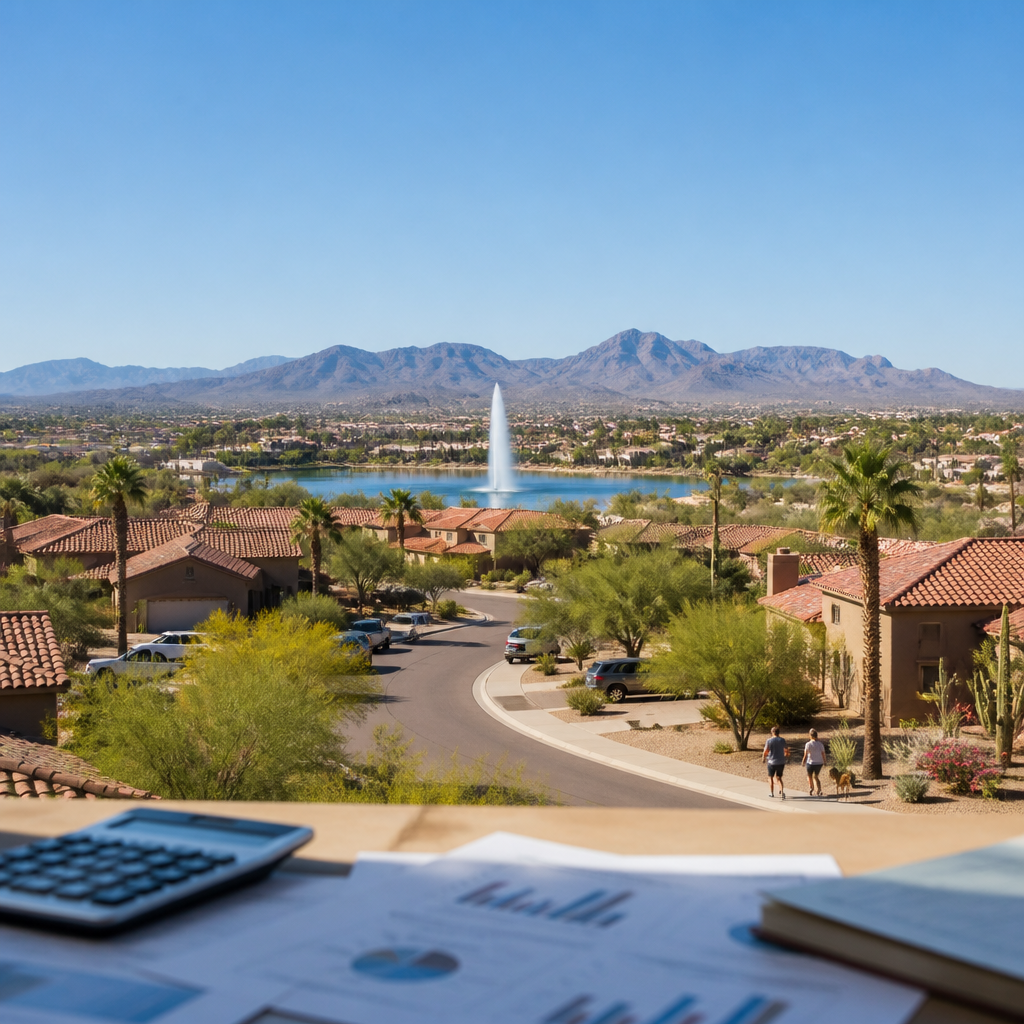
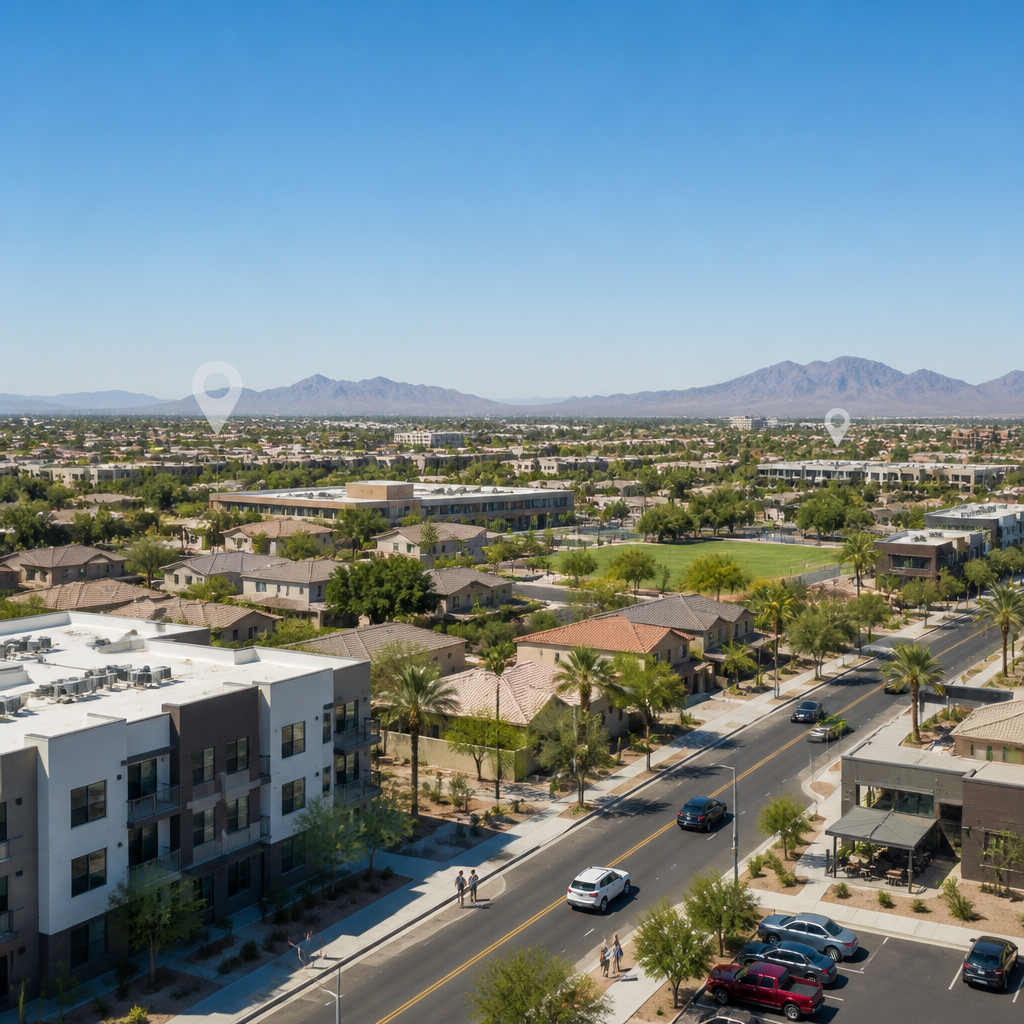
Mesa AZ Residential Real Estate: Trends and Opportunities in 2026
Mesa AZ Residential Real Estate: Trends and Opportunities in 2026 Mesa AZ residential real estate enters 2026 shaped by strong population growth, new employment centers, and evolving lifestyle preferences. According to U.S. Census QuickFacts, Mesa now has more than 518,000 residents, placing it amon
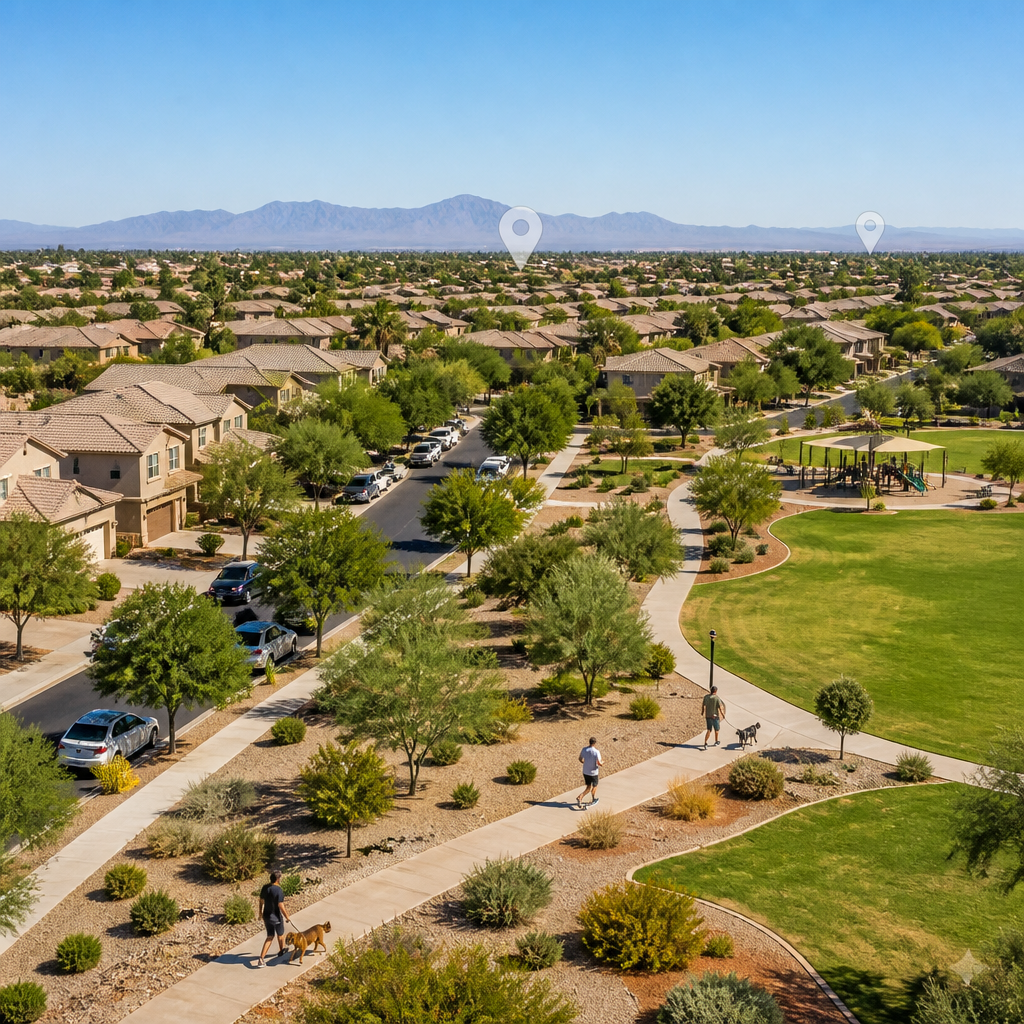
Moving to Gilbert AZ: Essential Tips and Insights for 2026
Moving to Gilbert AZ: Essential Tips and Insights for 2026 Moving to Gilbert AZ in 2026 places new residents in one of the country’s fastest-growing midsize towns. According to U.S. Census Bureau QuickFacts, Gilbert’s population climbed past 275,000 residents by 2023, reflecting decades of steady ex